Introduction
She did not call it medicine.
She called it by its name: Nchuanwu, if it was African Basil; Zobo, if it was hibiscus; Ororo for moringa. She said simply, drink this. She did not explain why, because the why was not in question. The knowledge lived in the plant; she carried the knowledge; that was enough.
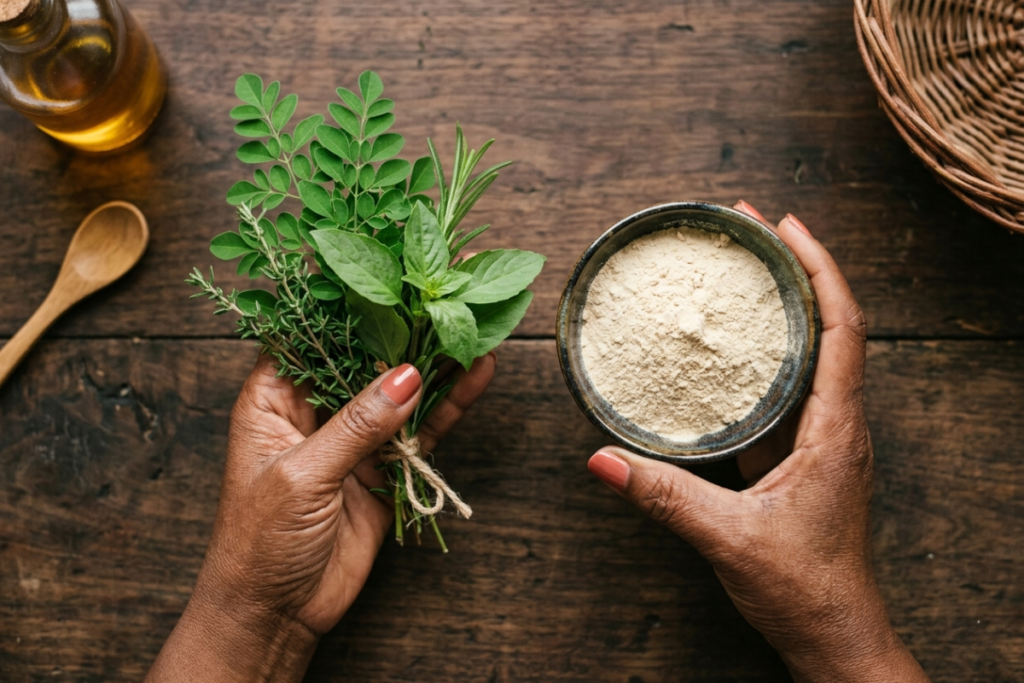
Across Nigeria, across this continent, generations of women held a pharmacopoeia in their kitchens that no textbook had yet transcribed. They knew which leaf to press to a feverish forehead, which root to add to the pepper soup when someone was recovering from something, and which bark to steep when the body was asking for rest.
This knowledge was not primitive. It was precise, accumulated over centuries of careful observation and practice; and in many instances, it is now being validated by the same scientific institutions that once dismissed it as folklore.
This piece is not a clinical explainer. It is an ode: a naming of what already existed, with the love and specificity it deserves. These are the Nigerian healing herbs your grandmother knew, and what they are doing in every cup of Zimuzo Africa tea.
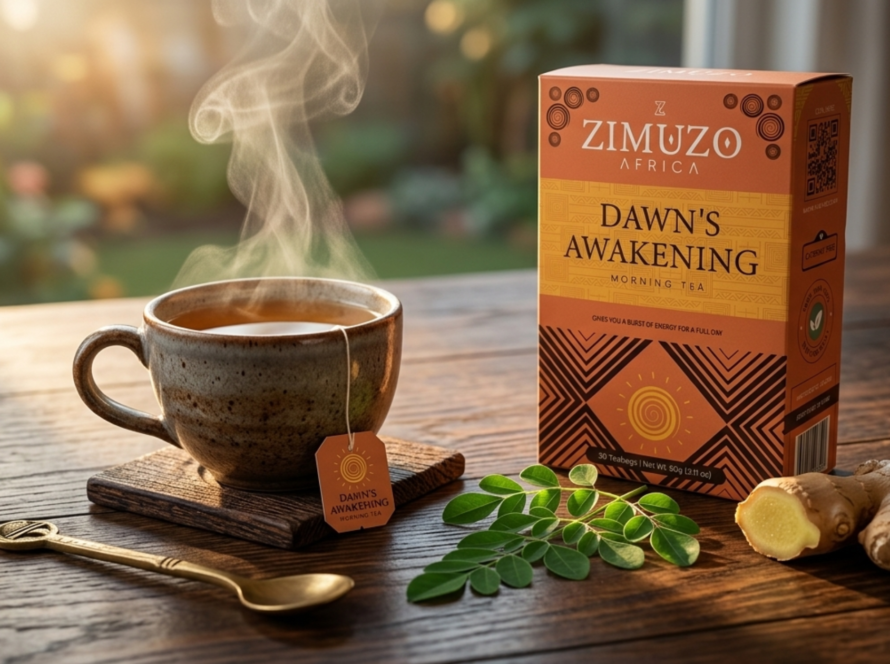
Shop Dawn’s Awakening, our moringa-led morning blend
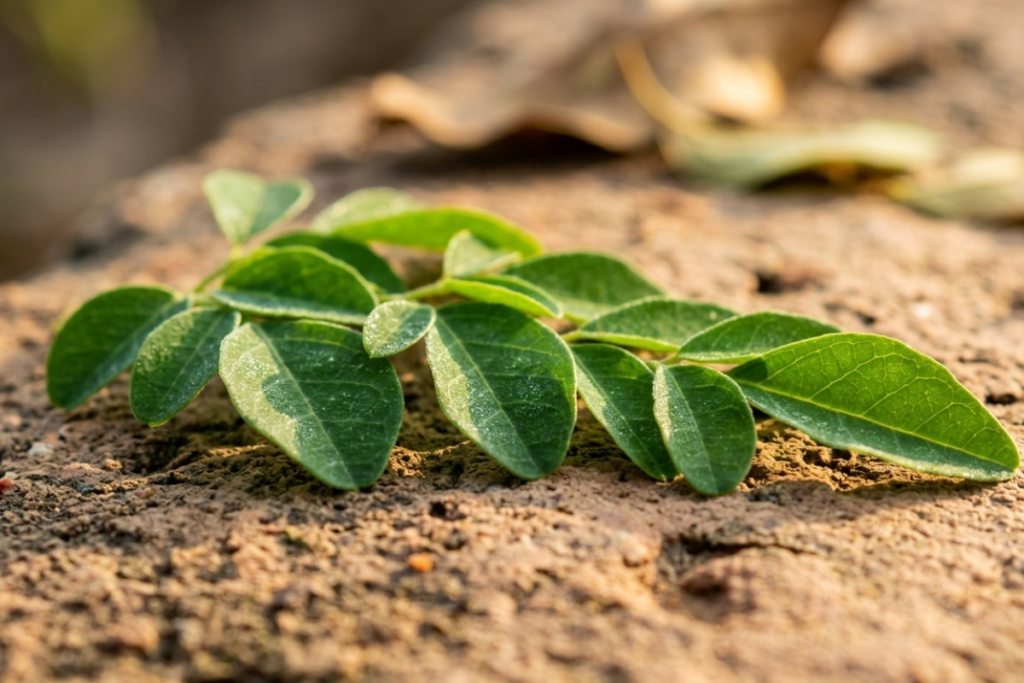
Moringa: The Tree That Feeds Everything
The traditional use
The Yoruba call it Ewe Ile Aiku, loosely translated as the leaf of immortality. Across northern Nigeria and the Sahel, it has been a food source and a medicine for longer than recorded history allows us to trace. In Igbo communities, it has been used to address malnutrition, to support lactating mothers, and to treat inflammation.
The Moringa oleifera tree is extraordinary for one specific reason: it refuses to be scarce. It grows fast, in poor soil, in drought, in heat; it does not require ideal conditions. Every part of the tree is edible and useful, including the leaf, the pod, the seed, the root, and the flower. West African communities who lived in conditions of food insecurity knew this and depended on it. The tree sustained them when little else could.
What it does in the body
Moringa leaf is among the most nutrient-dense foods documented. It contains significant quantities of iron, protein (including essential amino acids), calcium, vitamin C, and B vitamins. It also contains adaptogens: compounds that help the body manage physical and mental stress by regulating cortisol. This is why the energy it provides is sustained and steady, rather than the spike and fall associated with caffeine.
In the Zimuzo range
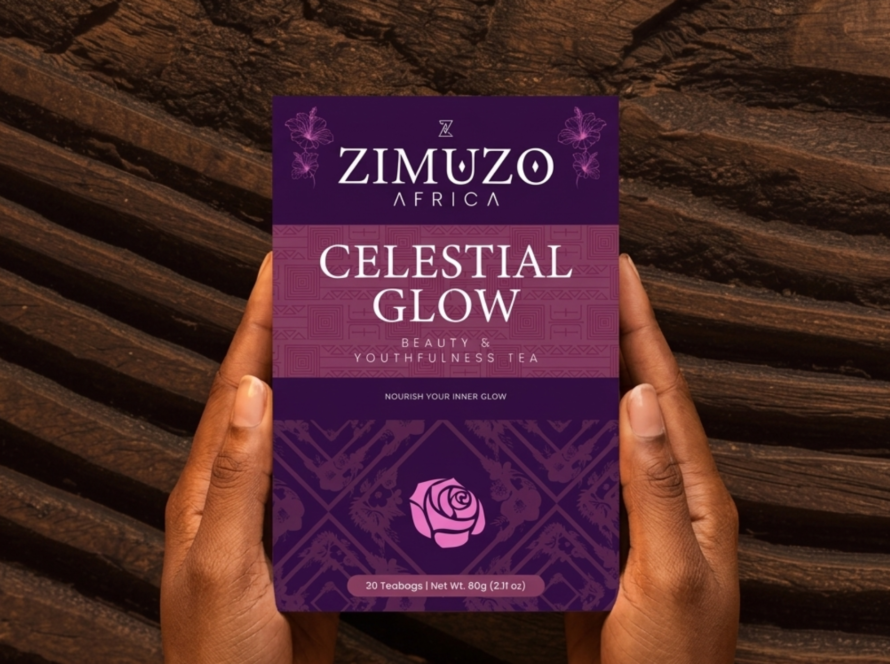
Moringa is the lead ingredient in Dawn’s Awakening Morning Tea, 15 grams per blend, more than any other herb. It also appears in Celestial Glow Beauty Tea, where it supports skin health, hair strength, and overall cellular vitality.
African Basil: The Herb That Smells Like Home
The traditional use
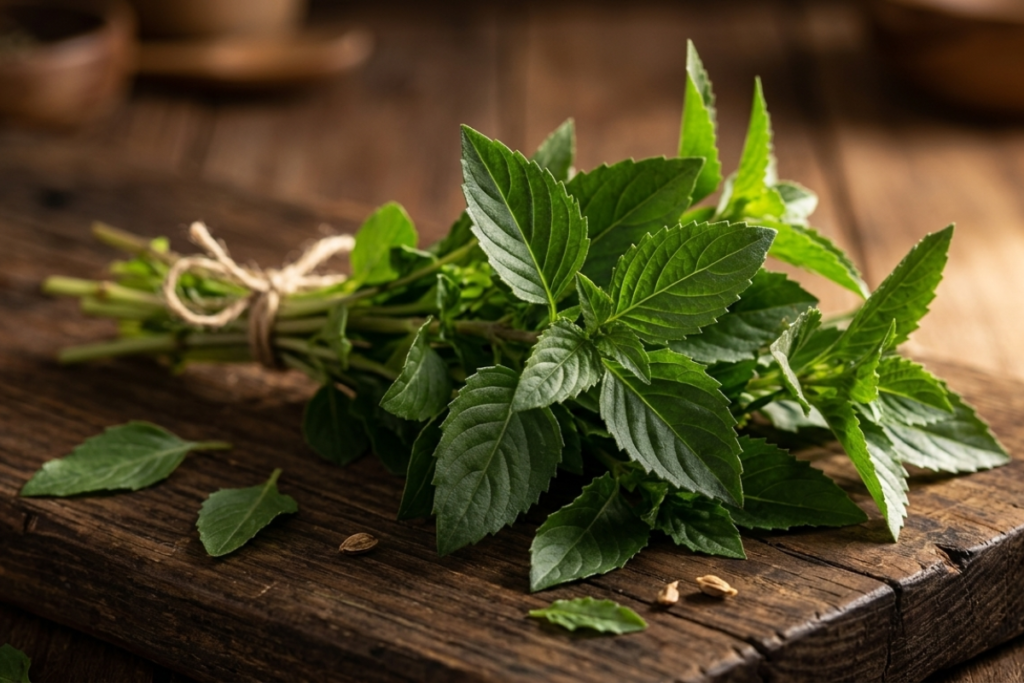
The Igbo call it Nchuanwu; the Yoruba call it Efinrin. In English it is called African Basil or clove basil, Ocimum gratissimum, and it is one of the most widely used medicinal herbs in sub-Saharan Africa.
It grows close to homes, deliberately. It was planted near kitchens and compounds not only for culinary use but for its protective and medicinal properties. Mothers crushed the leaves between their palms and pressed them to the foreheads of children with fevers. Healers used it to treat infections, headaches, and respiratory conditions. In many communities, it was also burned as an insect repellent. It was, in every practical sense, a household pharmacy that grew in the garden.
What it does in the body
Modern research has identified significant antimicrobial, anti-inflammatory, and antioxidant activity in African Basil. Its essential oils, particularly eugenol, the same compound responsible for clove’s distinctive scent, are responsible for many of its medicinal properties. African Basil also contains compounds that support the nervous system: it reduces cortisol, promotes calm, and has been shown in studies to have mild anxiolytic effects.
In the Zimuzo range
African Basil appears in four of our seven blends. In Dawn’s Awakening, it supports mental clarity and sustained alertness. In Twilight’s Embrace, it reduces stress and promotes calm for sleep. In Crimson Comfort, it acts as a muscle relaxant during the menstrual cycle. In Midday Harmony, it soothes the digestive system after lunch.
Bitter Kola: The Kola of Endurance
The traditional use
There are two kola nuts in West African tradition, and they are not the same thing.
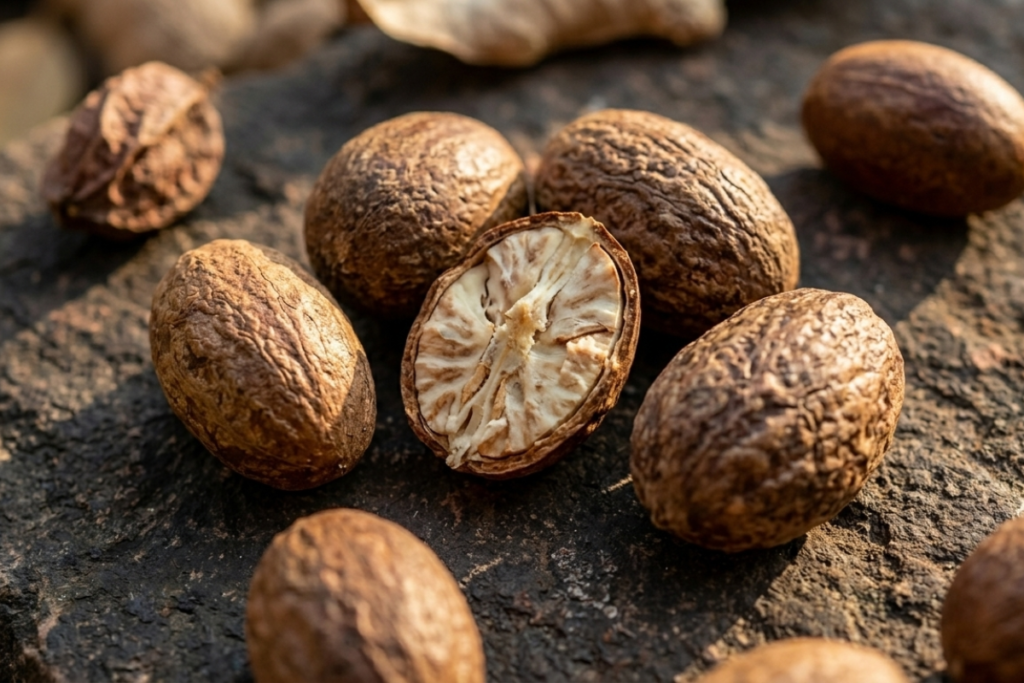
The bitter kola, Garcinia kola, is the one that demands respect. It was not chewed casually; it was offered to guests as a mark of serious welcome, held by elders at the opening of important gatherings, and chewed by hunters before long journeys into the forest. The Igbo, Yoruba, Hausa, and many other West African ethnic groups all have distinct ceremonial relationships with it. It appears in the kola nut ceremony, one of the most sacred acts in Igbo culture, where it is used to commune with ancestors and to bless important occasions.
This is not a supplementary food. It is a ceremonial object and a medicine, held in enormous cultural regard for centuries.
What it does in the body
Bitter Kola contains kolaviron, a bioflavonoid complex with documented antioxidant, anti-inflammatory, and hepatoprotective properties. It also contains caffeine and theobromine in natural form, but in quantities that produce sustained alertness and physical endurance rather than the abrupt spike of synthetic caffeine. Its effects on endurance and stamina are well-observed, which is why it was used by those who needed to sustain physical effort over long periods.
In the Zimuzo range
Bitter Kola is the distinguishing ingredient in Sango’s Potion Pre-Workout Tea, 12 grams per blend, combined with Green Tea, Beetroot Powder, Ginger, and Cloves.
Hibiscus: Zobo’s True Name
The traditional use
You already know hibiscus. You have been drinking it your whole life.
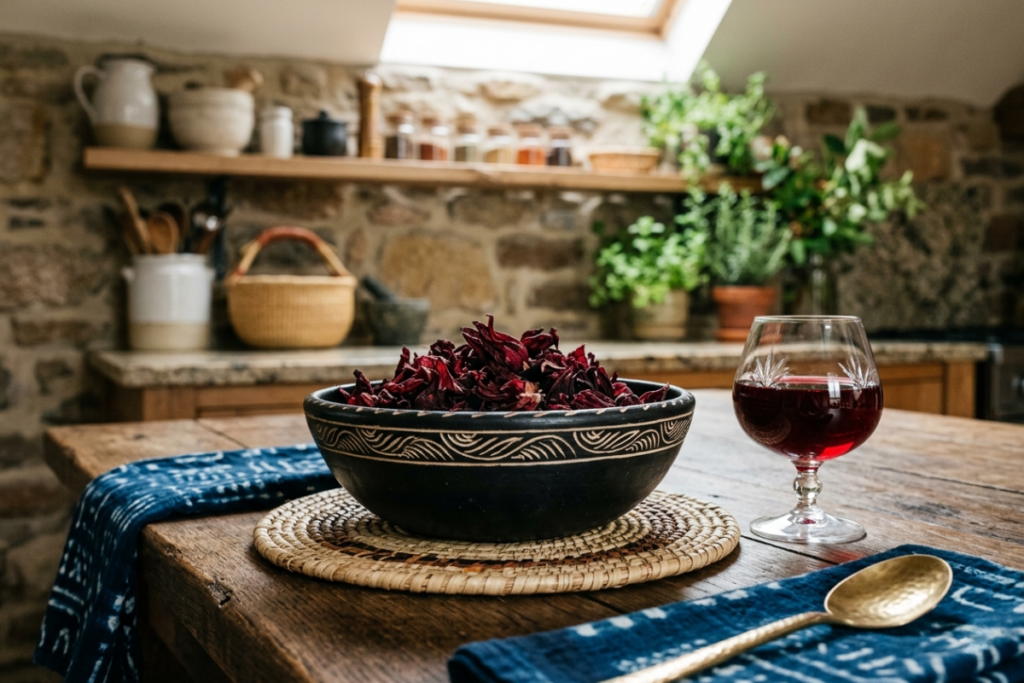
Hibiscus sabdariffa, the roselle, is the plant behind zobo, bissap, sobolo, and karkade. It is the drink of West Africa, of North Africa, of every community along the trade routes that crossed this continent and carried food culture with them. It was used in traditional Nigerian medicine to address high blood pressure, to support kidney health, and as a source of iron for women experiencing blood loss. The deep crimson colour of its dried calyx is not just visually striking; it indicates a high concentration of anthocyanins, the antioxidant pigments responsible for many of its health benefits.
What it does in the body
Hibiscus is exceptionally high in vitamin C and anthocyanins, compounds with potent antioxidant and anti-inflammatory properties. Multiple peer-reviewed studies have examined hibiscus’s role in cardiovascular health, specifically its ability to reduce systolic blood pressure in individuals with mild hypertension. For women, it is particularly relevant: hibiscus supports iron levels and has mild antispasmodic properties, which is why it has been used traditionally to ease menstrual discomfort.
In the Zimuzo range
Hibiscus leads Celestial Glow Beauty Tea, 15 grams per blend. It also appears in Crimson Comfort Menstrual Tea, where it supports iron supplementation and blood health during the cycle.
Baobab: The Tree That Stores Time
The traditional use
The Baobab tree, Adansonia digitata, does not rush. It can live for thousands of years; the oldest documented Baobab trees on this continent predate most of what the Western world calls recorded history.
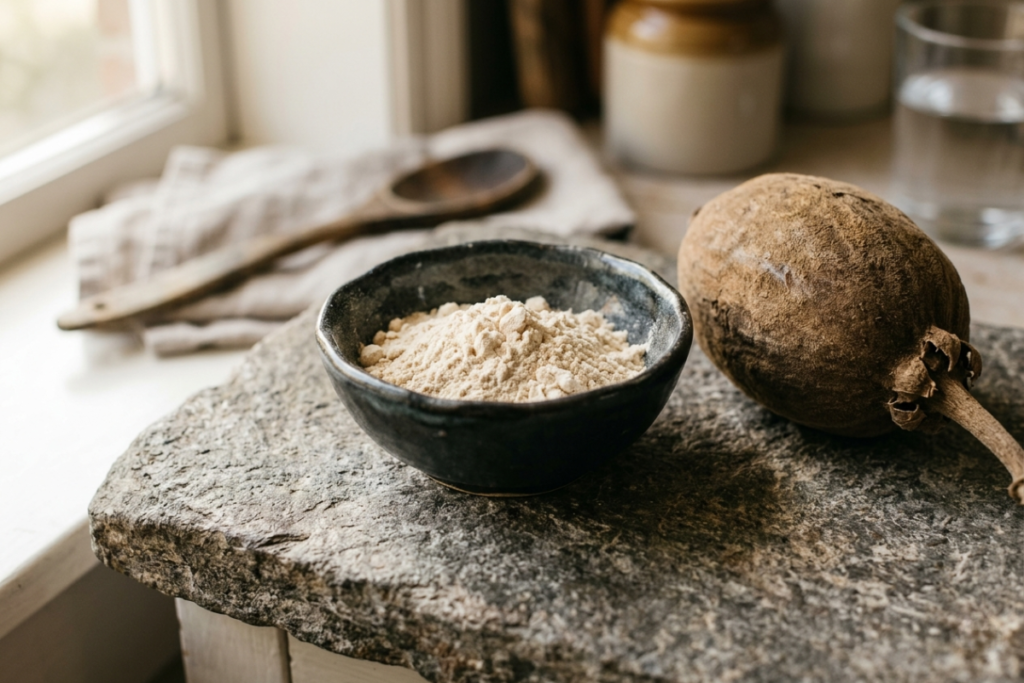
In Nigerian and West African communities, Baobab has been a food source, a medicine, and a spiritual landmark for as long as people have lived alongside it. The fruit pulp, pale, powdery, and tart, was eaten fresh and dried, added to water to create a nutritious drink, and used as a souring agent in cooking. In traditional medicine, Baobab has been used to treat fevers, gastrointestinal issues, and as a general nutritive tonic. Its high vitamin C content made it a natural defence against illness in communities without access to pharmaceutical intervention.
What it does in the body
Baobab fruit powder has one of the highest vitamin C concentrations of any plant food on record, significantly higher than citrus. It is also very high in dietary fibre, calcium, potassium, and iron. Its prebiotic fibre content supports gut health and the absorption of other nutrients consumed alongside it. The calcium and magnesium content are particularly relevant for women; both minerals are essential for managing muscle cramps and the physiological demands of the menstrual cycle.
In the Zimuzo range
Baobab appears in Celestial Glow, where its vitamin C supports collagen production and skin vitality. It also appears in Crimson Comfort, where its iron, calcium, and magnesium directly address what the body loses and requires during menstruation.
The Knowledge That Was Always Here
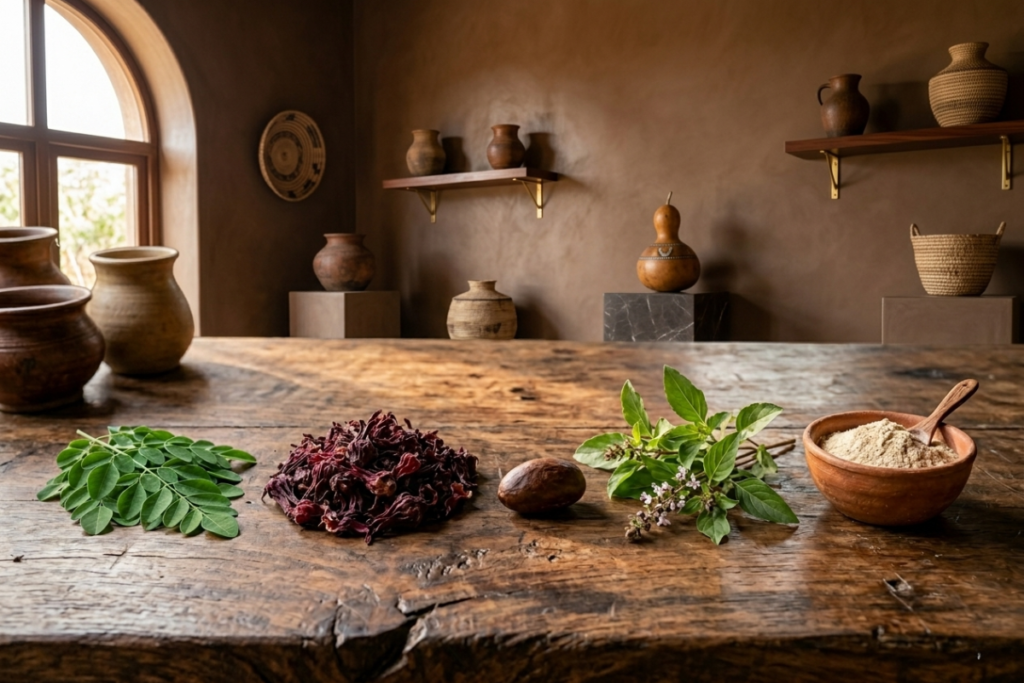
These five plants have sustained West African communities for longer than any of us can fully trace. They were not discovered by researchers or introduced by the supplement industry; they were grown, harvested, used, and passed down by the women and men who understood them most intimately, through practice, through observation, through the kind of knowledge that lives in the body before it reaches the page.
What Zimuzo Africa does is simple: we take this knowledge seriously. We source these herbs from Nigerian farmers who grow them with care. We blend them with intention. We tell you exactly what they are and where they come from; because the herbs your grandmother knew deserve to be known.